
The term tool watch gets thrown around a lot. In fairness, it is a real term. Dive watches, field watches, pilot watches, GMTs, and chronographs all have roots in solving actual problems. They were designed to do jobs, not just look good sitting in a watch box. A lot of those jobs were military, but plenty came from commercial diving, aviation, exploration, and other work where being able to tell the time mattered.
Somewhere along the way, though, we started treating “tool watch” as a look instead of a purpose. Put a matte dial on something, add a little military-style writing, throw it on a NATO strap, and suddenly it is being sold as a piece of hard-use equipment. That does not automatically make it a bad watch. It just does not tell me much about what the watch was actually built to do.
Years ago, names like Tudor, IWC, Stowa, Seiko, and plenty of others had watches connected to military or professional use. Today it feels like you can throw a stone and hit 300 brands advertising some kind of military heritage. Sometimes that heritage is substantial. Other times it amounts to a small order, a short-lived relationship, or a design inspired by something issued decades ago. Those are not all the same thing.
I want to talk about four brands that, for different reasons, stand out to me in this conversation: Marathon, CWC, Elliot Brown, and G-Shock. They do not all have identical histories or do the same job. That is actually part of the point.
Before getting into the watches, I want to take a second to thank all of the military personnel, first responders, and law enforcement officers for their service. All of you are a major part of the backbone and foundation that allows people to live their lives.
To my fellow contractors, keep up the great work and keep doing what you do. I know firsthand that a lot of what you do goes unseen, and I wanted to acknowledge you separately.
Marathon: Still Built Around the Job
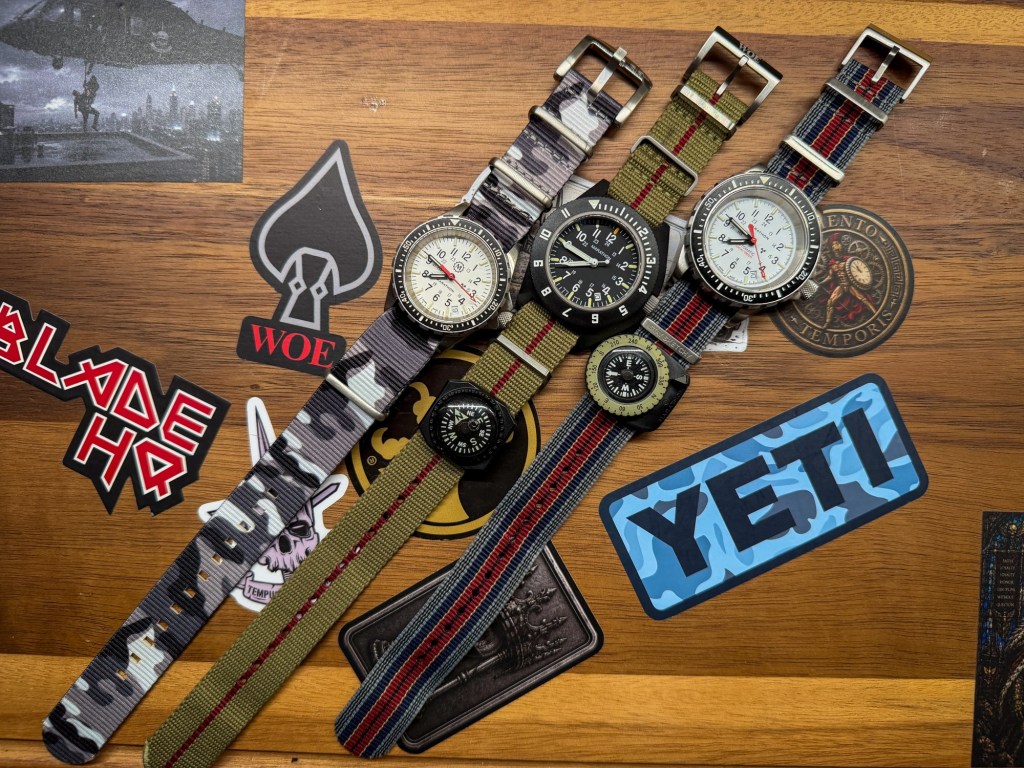
Marathon is probably the easiest place for me to start, partly because I own several and partly because the brand makes sense to me. It has a long history supplying timepieces for government and military requirements, and it continues to make watches around those kinds of specifications. That matters more to me than a marketing campaign about looking tactical.
Take the MSAR. It is not trying to reinvent the dive watch. You get a legible dial, a timing bezel, serious water resistance, and a case that feels designed around use. Mine is the 36mm Arctic quartz. I like the size, and I like that quartz makes sense when the goal is to have something ready to go without thinking much about it.
Then there is the Navigator. Mine is all black with MaraGlo. It fills a different role than the MSAR, which is exactly why I can appreciate both. But the Marathon that means the most to me is my old H3. It is a June 2000 U.S. Government military watch, and the tritium is long dead. That does not matter to me. This was a legitimately issued watch belonging to a contractor who became my mentor, the man who taught me everything. He gave it to me, and it is one of those pieces that I will never sell. It is not valuable to me because of a spec sheet or what somebody would pay for it. It is valuable because of the man who wore it and the history that came with it. That, to me, is what a real tool watch can represent.
I also appreciate Marathon’s approach to illumination. Tritium is not some magical feature, and it has a limited useful life, but there is a practical benefit to being able to read the dial in darkness without first charging it with a light. It is one of those choices that makes sense when you think about the intended user.
Are Marathons perfect? No. They can be thick, the styling is not for everyone, and servicing or replacing aging tritium components is part of the ownership conversation. But the watches have a reason for being the way they are. I respect that.
CWC: Not Trying to Be Something Else
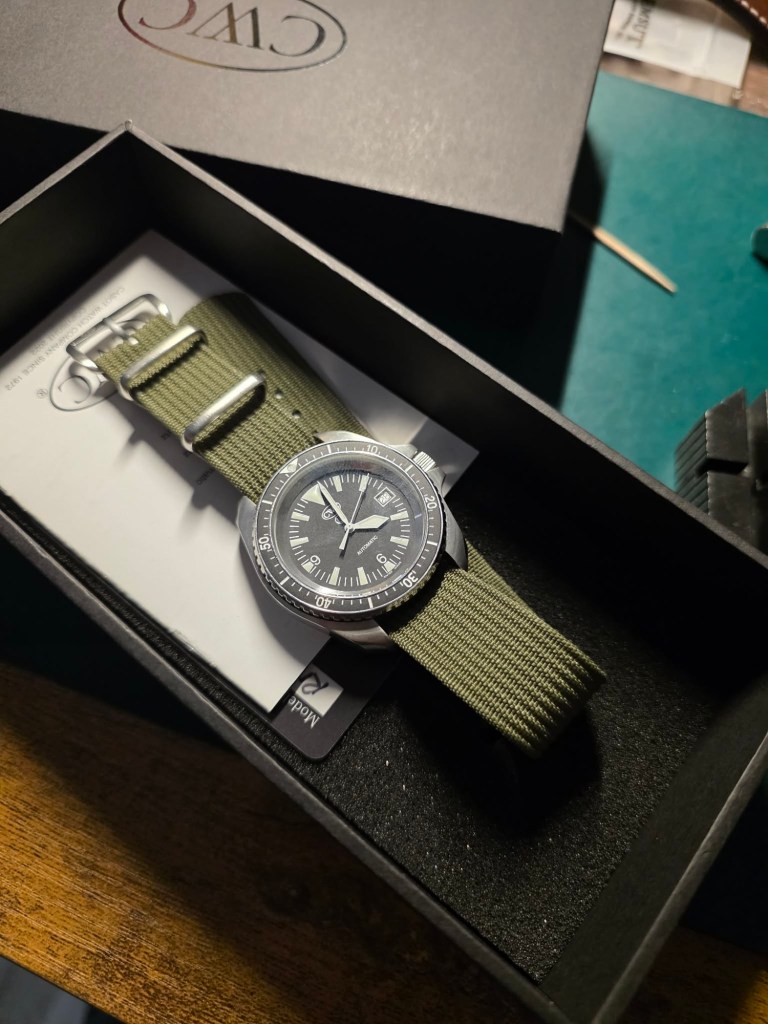
CWC is another brand I have wanted for a long time. The company’s history supplying watches to the British armed forces is a major part of the appeal. It is not just that the watches look like military equipment. The designs are tied to real service requirements and a long history of people wearing them on the job.
I recently worked out a trade for a CWC Royal Navy automatic diver, giving up my Marathon GSAR Arctic in the process. On paper, you can make an argument for either watch. That was not really the deciding factor for me. I have wanted a CWC, plain and simple. I also want some of the pieces in my collection to represent watches with a proven hard-use history, and this one fits that direction.
What I like about CWC is the lack of nonsense. The watches tend to look like exactly what they are. The emphasis is on clear timekeeping, straightforward construction, and designs that have not needed to be dressed up to make them interesting.
That does not mean every CWC sold today is sitting on a military wrist, or that buying one makes anyone an operator. It means the brand has a legitimate connection to the work these watches were developed for. For me, that is enough.
Elliot Brown: Built for the People Doing the Work
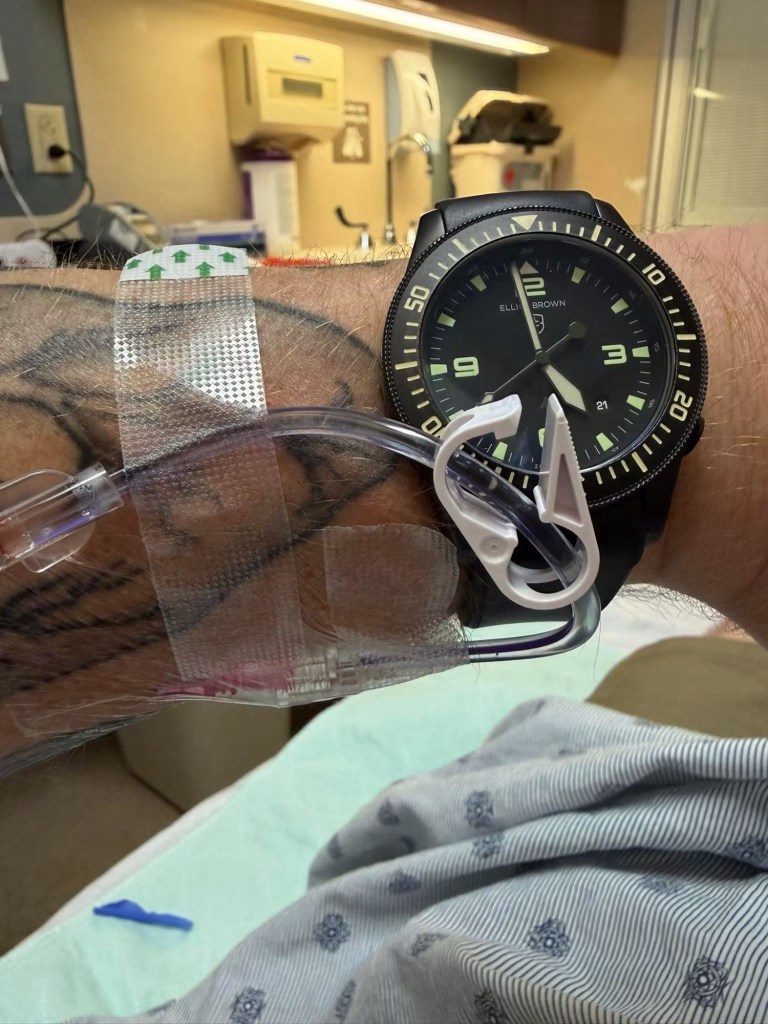
Elliot Brown belongs in this conversation for a very specific reason. The company might not have the same length of history as CWC or Marathon, but it has actually developed and supplied watches for people doing demanding work. The Holton Professional was developed with the British Special Boat Service and supplied for military issue. That is not a watch company borrowing a military look to sell a story. That is a watch built in response to a real requirement.
The Holton Professional is the perfect example. The design decisions make sense when you consider the people it was intended for: a bezel that can be operated with gloves, a dial that is easy to read, and a construction meant to handle rough conditions. Those are practical considerations, not decorative features. There is a big difference between putting a military-inspired dial on a watch and sitting down with the people who will actually depend on it to figure out what they need.
I can speak to this one from experience. I owned an Elliot Brown Holton Professional, and I more than put that watch through its paces. It was not a piece I bought just to admire or take photos of. I used it. I got to see what it was like to live with one of these watches beyond the marketing and the specifications. I do not currently have one in my collection, but that does not erase the time I spent with it or what I learned from wearing it. It earned my respect because it was a capable watch in actual use. That is why Elliot Brown is on this list.
G-Shock: The One That Changed the Conversation
G-Shock is probably the odd one out here, and maybe the best example of why we should stop judging tool watches by appearance. It did not start as a military-issued dive or field watch. It started with the idea of making a watch that could take a beating. The result became a favorite of people who needed something inexpensive, dependable, and tough.
There is a reason you see G-Shocks on the wrists of military personnel, police, first responders, tradespeople, and just about anyone else who works with their hands. You do not need to manufacture a heritage story when the watches have been used in the real world for decades.
I have a DW9052 in my collection. It is not the most romantic watch I own. It is digital, it is practical, and I do not have to worry about it every time I bump into something. Sometimes that is exactly what a tool should be.
G-Shock also proves that a tool watch does not have to be mechanical, Swiss, expensive, or even analog. If the watch does the job, the rest is personal preference.
The Watch Is Only Half the Story
Here is where I think the conversation often goes wrong. A watch can be designed as a tool and still spend its entire life going from a desk to a dinner table. There is nothing wrong with that. Nobody has to deploy overseas, dive for a living, or work in a dangerous profession to enjoy a watch with that history.
At the same time, a watch does not stop being useful just because it lacks a military contract. A Seiko, Timex, Citizen, or something from a small independent brand can be the watch someone depends on every day. The person wearing it and what they do with it matter just as much as the name on the dial.
That is a big part of what Land Diver Society is about. We are not here to tell you that a watch only counts if it was issued by a government or has a particular look. We are interested in adventure, exploration, and the people behind the gear. Real people, real stories, useful things.
For my own collection, I am finding myself drawn back toward watches that have a clear purpose and, in some cases, a real history of hard use. Marathon and CWC speak to that side of me. I know what the Elliot Brown Holton Professional can take because I owned one and used it. G-Shock reminds me that practicality can be simple and affordable.
The distinction I keep coming back to is this: there is a difference between a watch designed to look like a tool and a watch designed to do a job. Both can be enjoyable. I just find myself more interested in the second one.
And once it is on your wrist, go do something with it. A tool watch becomes a lot more interesting when it starts collecting stories of its own.


Leave a Reply