
One of my favorite watch brands is Marathon. It isn’t the normal mainstream brand you hear a lot about outside certain circles or parts of the watch community. Recently, though, there has been a resurgence of coverage, from Sketchy Boyz Watch Club doing Marathon Mondays to collaborations in the works, and seemingly in production, from Watches of Espionage and Sketchy Boyz Watch Club. Both collaborations look like they will be badass pieces.
Where It Started
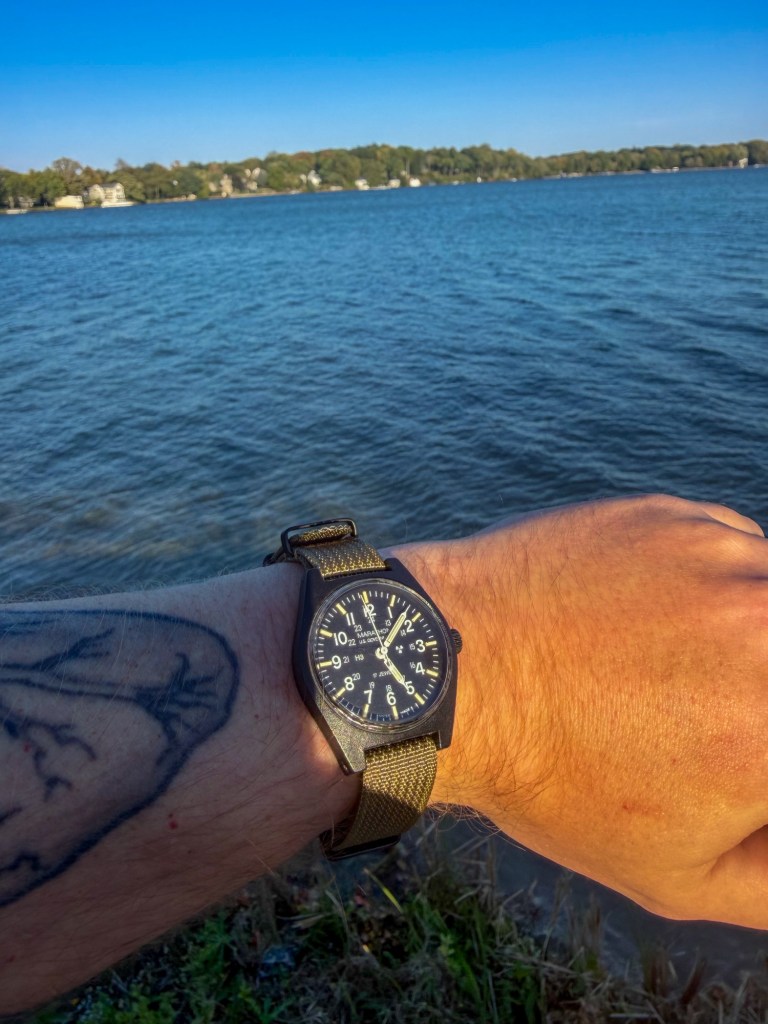
My first mechanical watch was a Marathon H3 gifted to me by an old crusty bastard who was my mentor when I started my contracting career. He was the one who got me into watches. Right before he retired, he gave me his H3, a watch that had actually been issued to him in 2000, before 9/11 and just before the start of the Global War on Terror.
By the time I received it, the crystal had a crack in it, the tritium tubes were well worn out, and it kept decent time, but nothing phenomenal. It was still a great watch nonetheless. Everything it needs could be replaced, and I could send it to Marathon to have it fixed without spending a fortune. But doing that would ruin part of the story and history of the watch for me. So it sits as it is and gets worn on occasion.
It took me a few years to pick up another Marathon, which ended up being a GPQ. That watch was worn and abused often until I started wearing more dive watches. At that point, I passed it on to a guy who was just starting to work on my team.
Finding My Way Back
Over the last year, I’ve found myself looking at Marathon more and more as I’ve shifted back toward hard-use tool watches. I started by picking up a JSAR. I found one for a good price and figured I would give the larger size a try. I had it for a little while, and it was great, but the size became more annoying by the day. Eventually, it left the collection.
I then made a deal to pick up three more Marathons: a GSAR, an MSAR, and a Navigator. Two quartz watches and one mechanical. Of those three, I’ve kept two.

The MSAR Arctic Quartz
The first is the smaller MSAR Arctic Quartz. At 36mm wide, with a 43.5mm lug-to-lug and a thickness of 13mm, this watch wears great. It’s smaller than what I’m used to, but it’s comfortable and easy to read. My only complaint is the 18mm lug width. I really wish it were 20mm.
This version uses tritium for illumination and, as the name suggests, runs on a quartz movement. It is truly a put-it-on, use-it, abuse-it, and forget-it watch. Whether you’re in the woods on a hunt, at the lake fishing, shooting, or dealing with whatever daily life throws at you, this piece is built to handle it. The 300 meters of water resistance only adds to that stress-free ownership.
Tritium is great because you can read the watch at any point without needing to charge the lume with light. It isn’t overly bright, which I appreciate on night hunts or when walking in the dark. In normal situations, it also isn’t bright enough that I would worry about it drawing attention from a person or animal.
This has been my main watch for about a week now, and I’m excited to keep testing it and see how it holds up over time. Mine has been riding almost exclusively on the S.B.W.C. 11B ‘The Hill’ strap. It fits the 18mm lugs, but firmly.

The Navigator
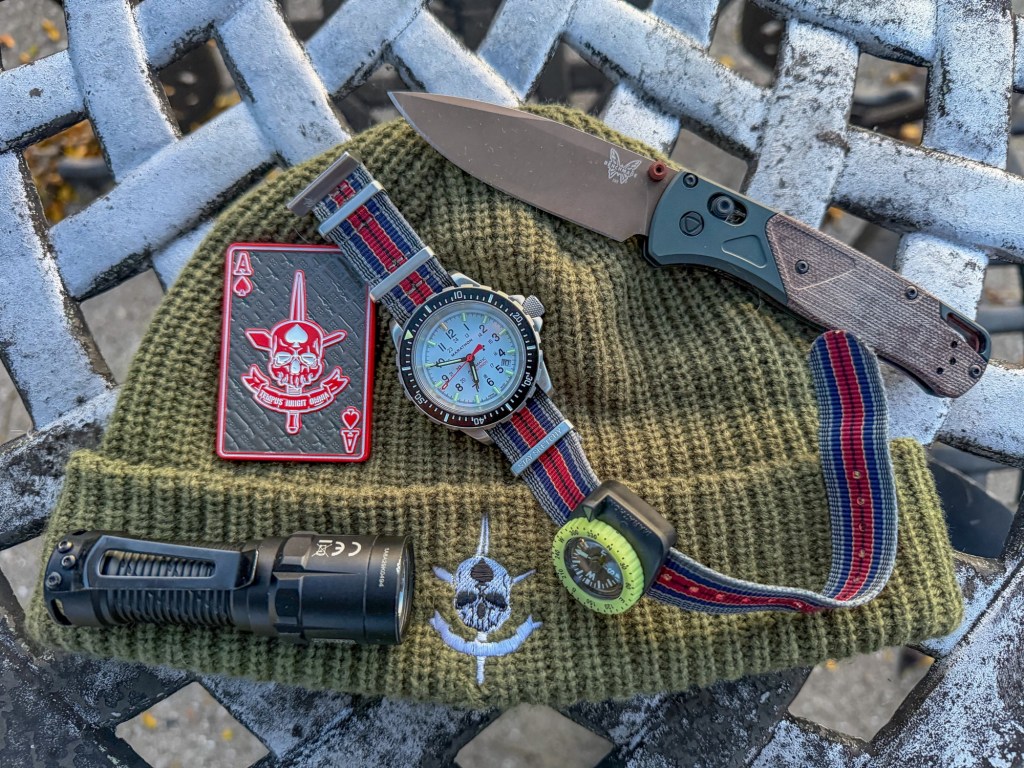
The second one I’m keeping is the Navigator. In some ways, it’s the polar opposite of the MSAR. This is a 41mm asymmetrical watch with a composite case rather than the stainless steel of the SAR series. It measures 48mm lug-to-lug with a matching 13mm thickness. It’s also quartz, but instead of tritium, it uses MaraGlo for illumination.
It has a push-pull crown and just 60 meters of water resistance. Even so, it feels like a solid tool, while being lighter and less noticeable throughout the day. As my buddy Theo put it, it feels more like a tactical Swatch than anything else. That’s a pretty good way to describe it.
I’m sure this watch will handle everything I put it through and more, but that still needs to be proven through use. The 20mm lug width is a welcome change from the MSAR, and I’ve been running it on a W.O.E. CAT strap since getting it. It needs more testing, but so far it has been great.
Why the GSAR Left
That leaves the third recent acquisition, and why I chose not to keep it. The GSAR measures 41mm across, 14mm thick, with a 20mm lug width and 300 meters of water resistance. On paper, it should be right in the sweet spot for my normal tool watch.
The problem was the thickness. That 14mm case bothered me more than I expected, much like the larger JSAR had. There is no doubt that the GSAR is a great watch, and somebody will absolutely love it. For me, though, I kept finding myself drawn to the smaller MSAR. I also wanted to give a quartz watch a fair shake, and that helped tip the decision in the MSAR’s favor.
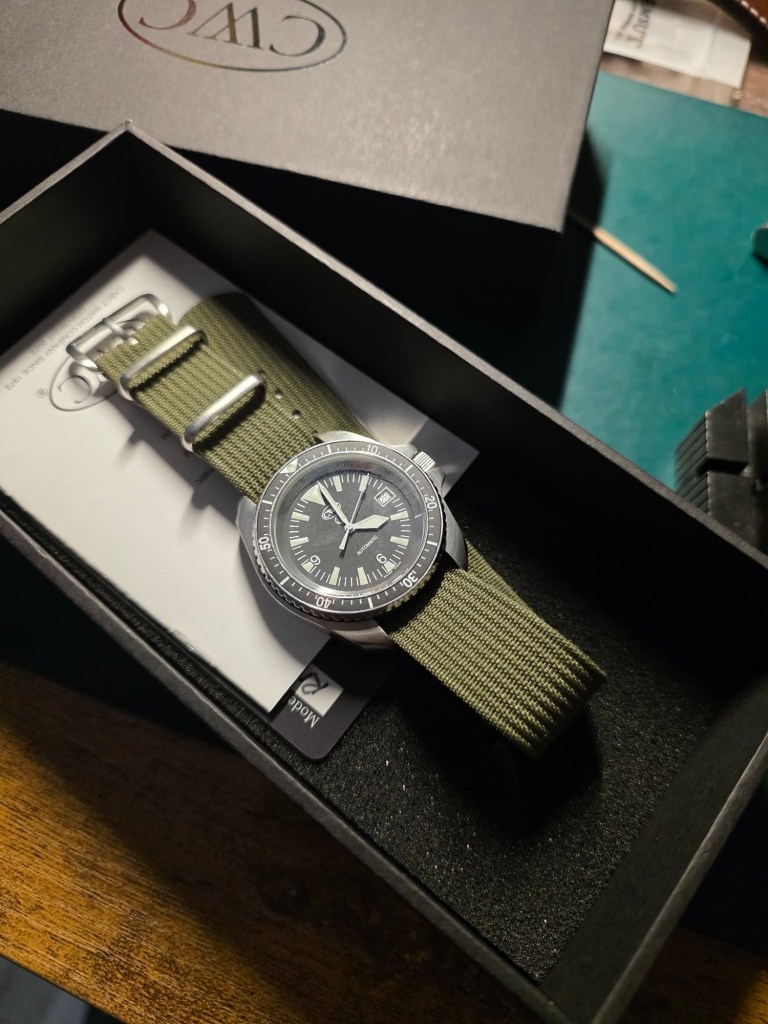
I made a deal to trade the GSAR for a CWC Royal Navy Automatic, which is on its way to me now. I’ve wanted to add a CWC to the collection for a while, and I’m looking forward to giving the brand a fair shake and comparing the two brands through some of my favorite models. I’m lucky to be in a position to do that.
Why Marathon Still Makes Sense
I’ve been a Marathon fan for years, and I have no problem saying this: if you’re looking for a solid, relatively affordable tool watch that can handle the rigors of everyday life and beyond, Marathon is a great place to look. The SAR line is a great option, the General Purpose line is great, and the Navigator line is proving to be a good option as well.
Depending on the model, you can get into a Marathon for under $500. You’re getting a Swiss-made watch, whether quartz or mechanical, with options for tritium illumination and a brand that has built a solid reputation. More importantly to me, you’re getting a watch that’s meant to be worn and used. That’s why I keep coming back.


Leave a Reply